


Distilled water
High-purity water is collected from a separate distilled-water outlet for daily use.
BiAGUA introduces a powerful way to use sunlight, addressing one of humanity’s most essential challenges: access to clean drinking water. Using only solar energy, it produces distilled water and hot water, bringing two everyday needs together in one system. Thanks to its innovative use of inverted evacuated glass tubes and ingenious passive design, BiAGUA uses only solar energy to produce distilled water and hot water. It goes beyond heating water to make access to clean water simpler, easier, and more affordable. By reducing dependence on purchased water and replacement filters, BiAGUA aims to support healthier lives and greater water independence for communities worldwide.
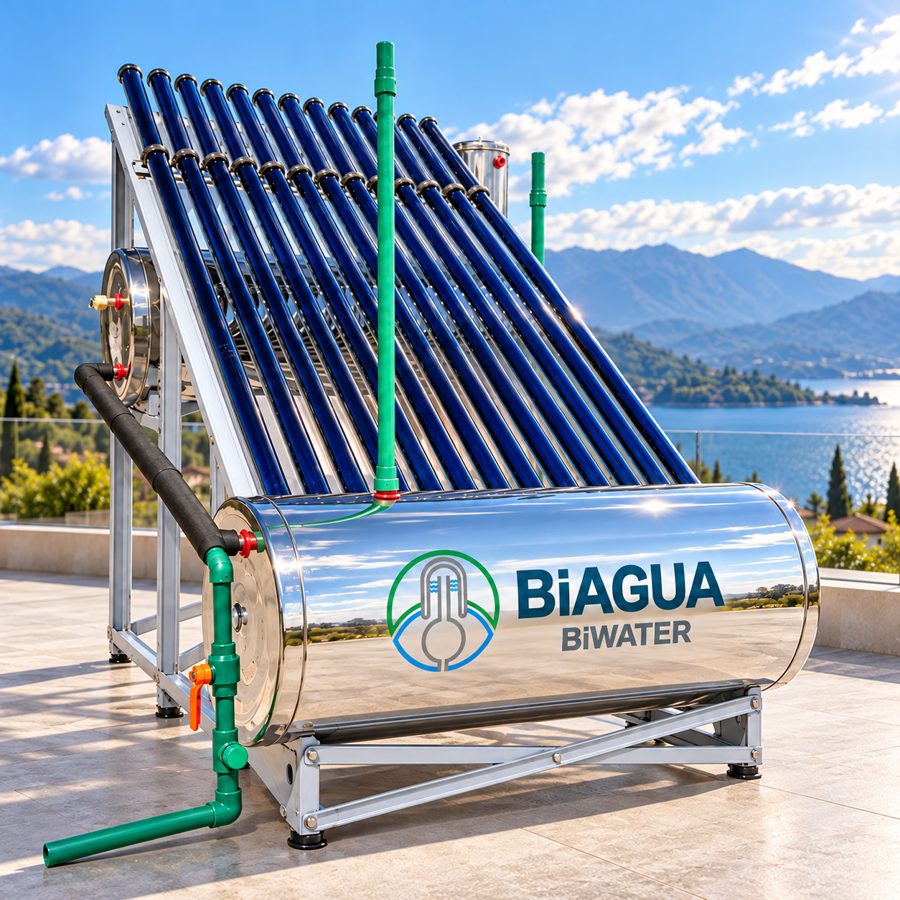
BiAGUA overcomes the limitations of conventional solar water heaters and electrical water purifiers, operating entirely at atmospheric pressure to efficiently produce distilled water and domestic hot water at the same time.
High-purity water is collected from a separate distilled-water outlet for daily use.
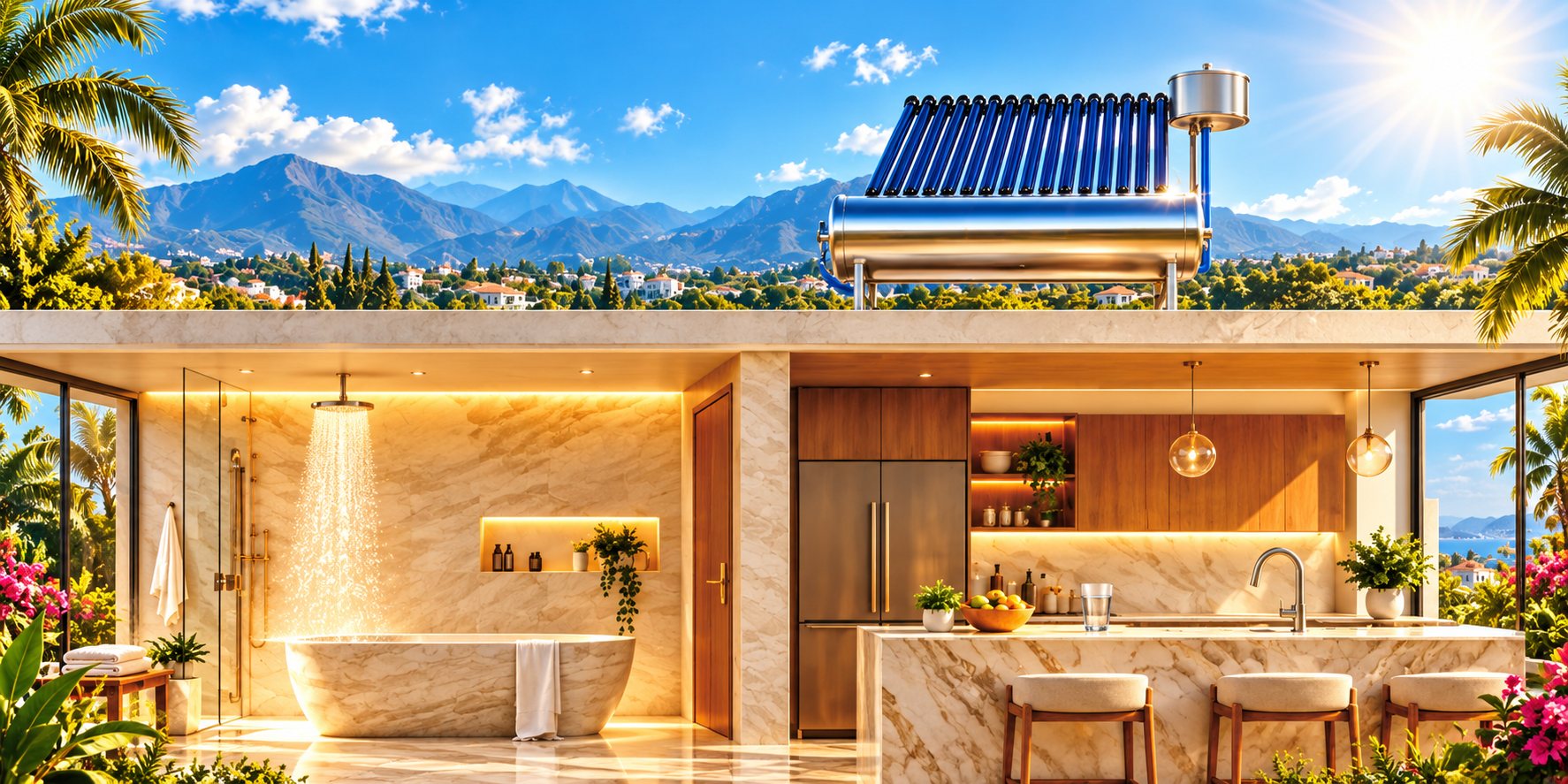
Recovered condensation heat helps warm domestic water for bathing, washing and cleaning.
Solar heat supplies both outputs, reducing dependence on purchased water and conventional water-heating energy.
A passive solar process reduces energy demand and disposable purification consumables.
Evacuated glass tubes capture sunlight and generate vapor. Stainless-steel conduits guide the vapor down to a condenser inside the insulated water tank. As distilled water forms, condensation heat is recovered to warm the surrounding domestic water. The two products leave through separate outlets.
Operating at atmospheric pressure, BiAGUA uses natural solar heating, evaporation and condensation. Its distillation process needs no electricity, filter cartridge, RO membrane, pump or anti-scaling chemical. Producing high-purity water at home can become more accessible and affordable; actual output and savings depend on local conditions.
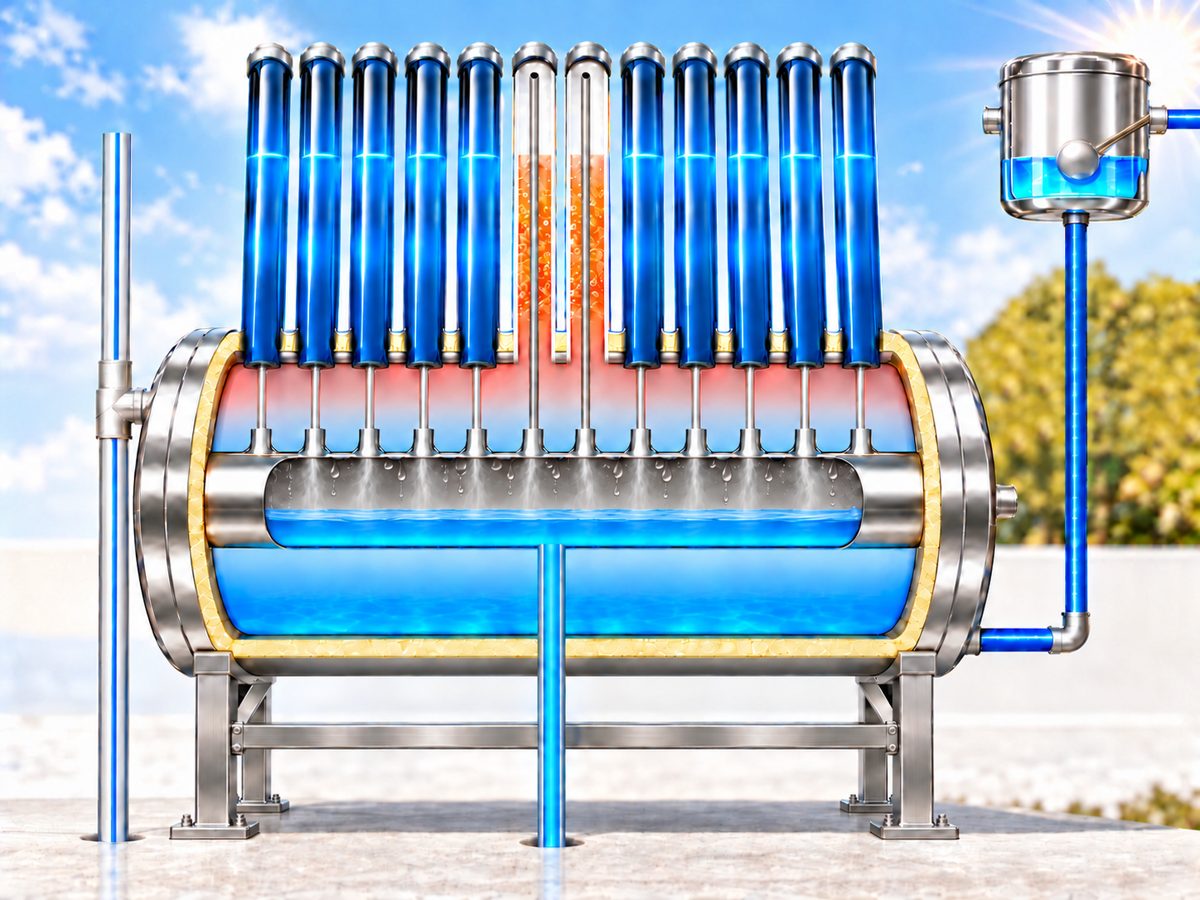
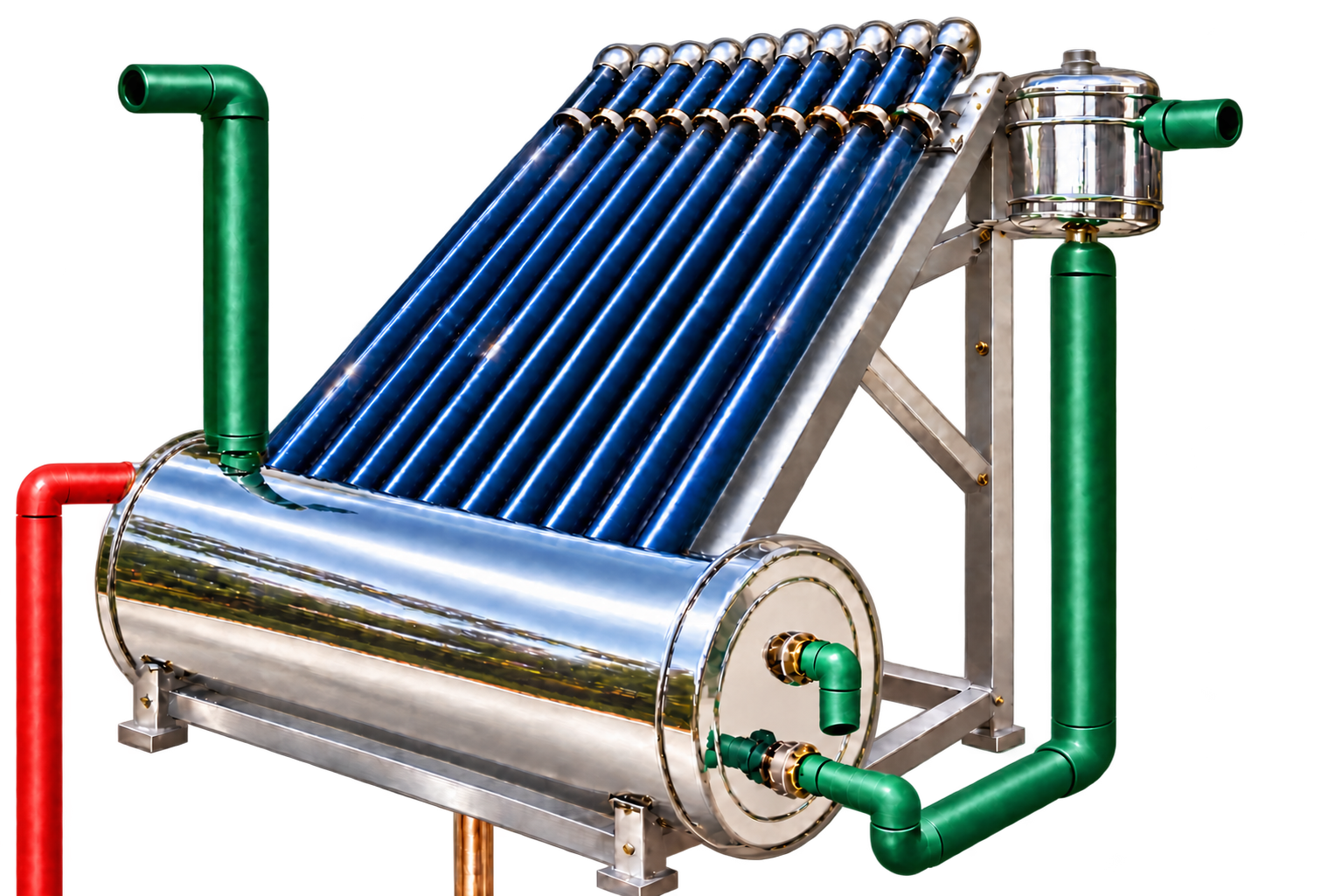
BiAGUA combines inverted evacuated glass tubes, stainless steel vapor conduits, an internal condenser, and an insulated hot water tank in one compact, passive system. Sunlight heats water inside the inverted tubes, generating vapor that travels downward through the conduits into the condenser. As the vapor condenses into distilled water, it releases heat to the surrounding domestic water. Separate outlets supply distilled water and hot water. These connected processes take place within a highly insulated thermal boundary, helping retain heat for useful work. Heat exchanged between the conduits and surrounding water remains available within the system, while the internal condenser recovers condensation heat for water heating. The same collected solar heat therefore serves two purposes in sequence: water purification and domestic water heating. BiAGUA brings these everyday needs together, adding distilled-water production to the benefits of solar water heating. An elevated makeup tank supplies water by gravity and maintains the operating water level throughout the system for optimal performance. The system operates without electric pumps, filter cartridges, or RO membranes—making practical use of sunlight through an integrated passive design built around heat recovery.
Sunlight heats water in the evacuated glass tubes.
Water evaporates; vapor gathers above the water level.
Stainless-steel conduits carry vapor to the condenser.
Vapor forms distilled water as its released heat warms the tank.
Collect distilled water and draw domestic hot water from separate outlets.
One passive solar technology supports household hot water and produces distilled water. Explore the design choices behind efficiency, simpler maintenance and a lower-plastic-contact water path.
Solar heat first generates vapor; condensation heat then contributes to warming domestic water.
Vapor condensation separates many dissolved salts and non-volatile substances from water. Test output before claiming drinking-water suitability.
The distillation process has no filter cartridge, RO membrane or anti-scaling chemical to replace.
Atmospheric-pressure operation and a vapor path without an external pump support simpler maintenance.
Glass tubes, stainless-steel vapor conduits and a stainless-steel condenser minimize plastic contact in the principal water-production path.
Compare six tube configurations and indicative daily production. Output depends on sunlight, climate, inlet-water temperature and operating conditions.
| Model | Tubes | Distilled water L/day | Hot water L/day | CO₂ avoided kg/year* |
|---|---|---|---|---|
| SD-12/1800-6/120 | 12 | 4–8 | 120 | 591 |
| SD-15/1800-7.5/150 | 15 | 5–10 | 150 | 739 |
| SD-18/1800-9/180 | 18 | 6–12 | 180 | 887 |
| SD-20/1800-10/200 | 20 | 7–13 | 200 | 986 |
| SD-24/1800-12/240 | 24 | 8–16 | 240 | 1,183 |
| SD-30/1800-15/300 | 30 | 10–20 | 300 | 1,478 |
*Results depend on solar radiation, climate, inlet-water temperature, location and operating conditions.
| Market | 19 L bottled water | Value of 3,000 L/year | 60,000 L hot-water value / year | Total value / year |
|---|---|---|---|---|
| United States | USD $6–10 | USD $950–1,580 | ≈ USD $330 | USD $1,280–1,910 |
| Europe | USD $9–18 | USD $1,420–2,840 | ≈ USD $495 | USD $1,915–3,335 |
| Middle East | USD $2.70–4.00 | USD $430–630 | ≈ USD $155 | USD $585–785 |
| South Asia | USD $1.20–2.50 | USD $190–400 | ≈ USD $155 | USD $345–555 |
| Africa | USD $1.50–6.00 | USD $240–950 | ≈ USD $270 | USD $510–1,220 |
| South America | USD $3.50–9.00 | USD $550–1,420 | ≈ USD $350 | USD $900–1,770 |
Hot-water values assume 60,000 L/year heated from 20°C to 45°C at 90% efficiency. The total adds the value of 3,000 L/year of distilled water, estimated using 19 L bottled-water reference prices, to that market's hot-water estimate. These are not current quotes or projected savings; check local prices and costs.
1. Greater value from sunlight — BiAGUA adds distilled-water production to solar water heating, delivering greater value from the same sunlight. 2. Helps sustain performance — Downward-opening tubes and recurring water-level changes help flush loose sediment and sustain performance, reducing buildup. 3. Easier integration of freeze protection — Tubes positioned above the tank can benefit from an optional tank heater for freeze protection. 4. Greater water independence — On-site distilled-water production also reduces dependence on purchased drinking water and its deliveries.
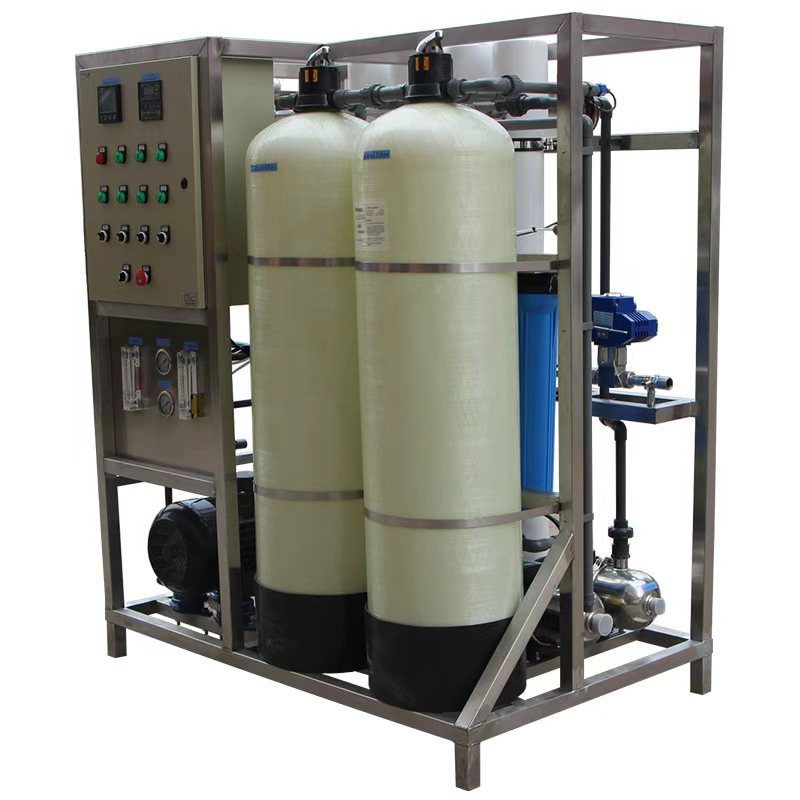
1. Purification powered by sunlight — solar evaporation and condensation produce high-purity distilled water without electricity, motors, pumps, filter cartridges, RO membranes, or antiscaling chemicals in the core process. 2. Effective microbial protection — thermal distillation provides an effective barrier against bacteria and viruses. 3. Constant High Purity without filter exhaustion — purification does not rely on cartridges that gradually become saturated. Proper operation, periodic cleaning, and hygienic collection and storage help maintain consistent water quality. 4. Less contact with plastics — glass tubes, stainless steel vapor conduits, and a stainless steel condenser minimize plastic contact along the main distillation path. 5. Distilled water plus hot water — recovered condensation heat warms domestic water, delivering two useful outputs from the same solar input. 6. Lower recurring costs — sunlight supplies process energy, while eliminating replacement purification cartridges and membranes reduces ongoing consumable expenses. 7. Built for long service life — passive operation at atmospheric pressure, without motors, pumps, or electronic control circuits in the core process, means fewer potential failure points. 8. Easy visual checking — after distillation and residual drainage stop at night or early morning, a dry outlet helps indicate that source water is not crossing into the distilled-water path, adding confidence in the next day’s production. 9. Greater independence — reduce reliance on electricity, replacement supplies, and purchased drinking water.
Questions about output, water quality, installation, maintenance and importing.
It produces distilled water and domestic hot water using the same solar heat input. The two water streams have separate outlets.
The reference average is about 10 litres of distilled water and 200 litres of hot water per day. Actual output varies with sunlight, climate, inlet-water temperature and use; some days produce less and others more.
Sunlight heats water inside inverted evacuated tubes. Vapor travels through stainless-steel conduits to a condenser. Condensation produces distilled water and releases heat to the domestic-water side.
The solar distillation process uses solar heat and does not require a powered pump, treatment filter cartridges or RO membranes. Any optional backup equipment has its own requirements.
Feedwater must be assessed for the intended application. Distillation does not remove every volatile chemical; collected water should be tested before drinking use.
No. Inspect the system and outlets, keep the collection path clean, and remove deposits as required by feedwater quality and operating conditions.
A sunny location, suitable structural support, the correct water supply arrangement and separate collection plumbing. Keep the condenser vent open and follow the model-specific installation instructions.
Send your country, contact details and requirements through Enquiry. Our team can discuss model selection, quantities, shipping and branding during follow-up.
A new generation of solar thermal technology that produces purified water while simultaneously providing domestic hot water, making greater use of the solar energy captured by evacuated glass tubes.
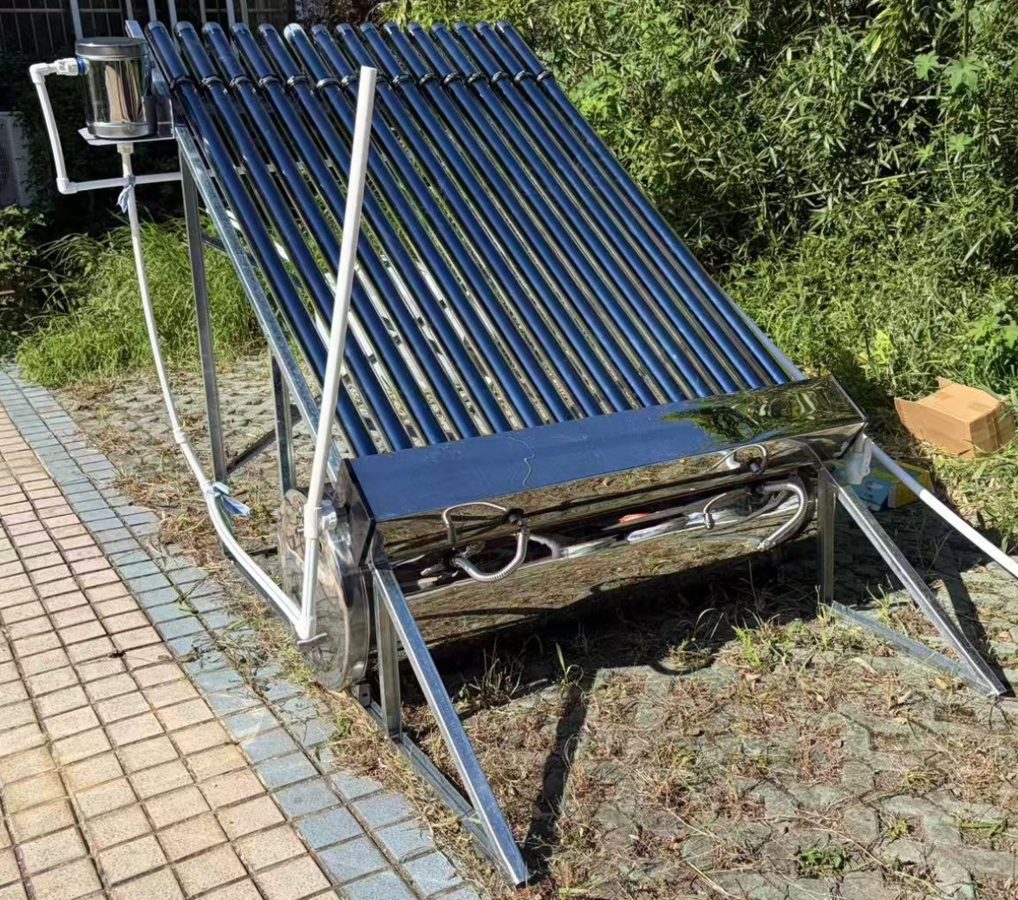
Decentralized solar desalination systems designed to produce fresh water from seawater or brackish water using solar thermal energy, reducing dependence on electricity-intensive desalination equipment and disposable treatment consumables.
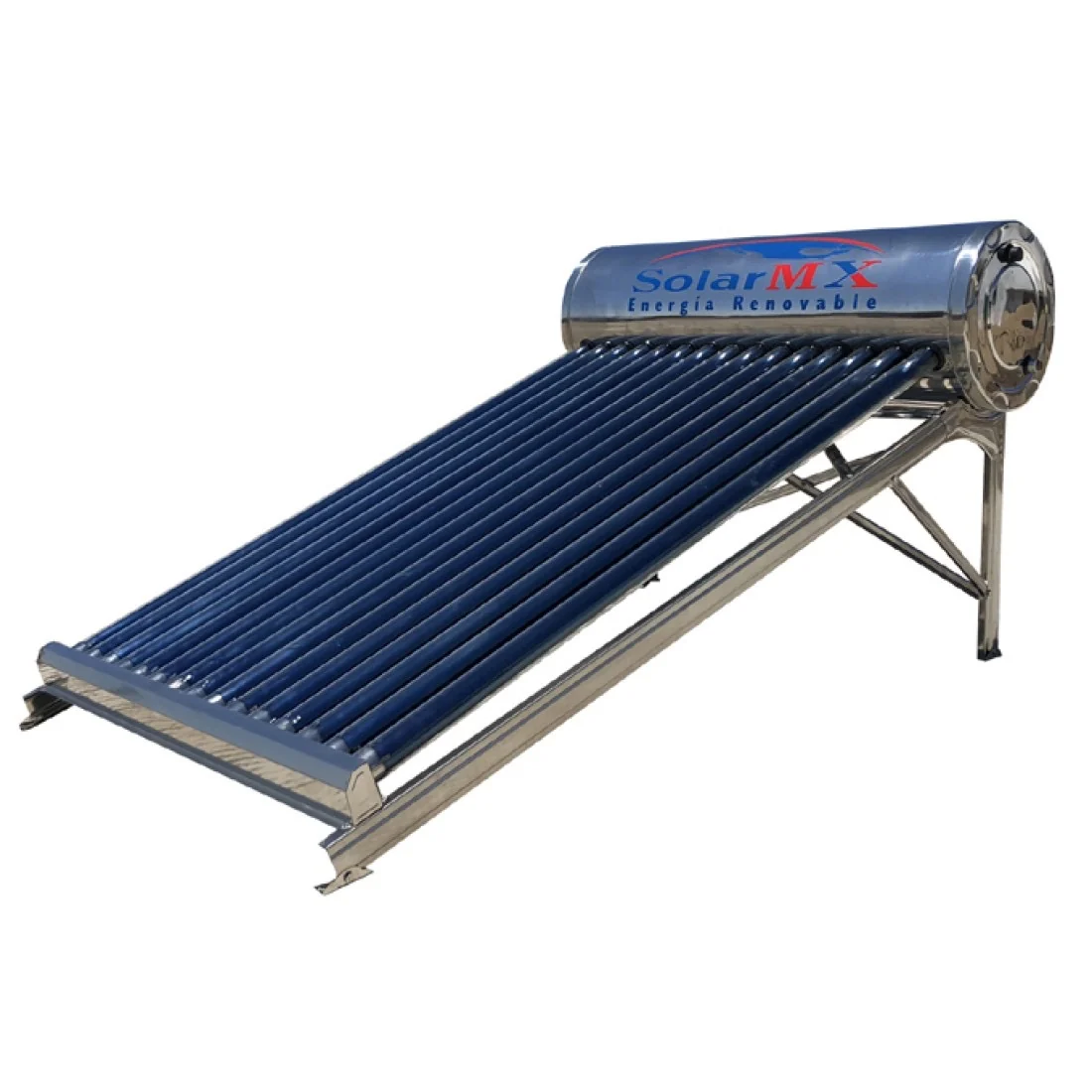
Reliable solar water heating systems that convert solar radiation directly into useful hot water for residential, commercial and institutional applications, reducing conventional energy consumption and operating costs.
SolarBridge сотрудничает с дистрибьюторами, монтажными организациями, разработчиками проектов и производственными партнерами по всему миру.
Связаться с SolarBridge
We specialize in the design and manufacturing of advanced solar thermal products, with strong expertise in pre-heat exchanging solar water heaters for residential, commercial, and industrial applications. We are also the developer of Solar BiAGUA solar distillation water heaters with multi-country patents, which will also be applied to solar desalination. Our vision is: “Wherever there is sunlight and sea water, there will be sufficient clean water.”